Echoes of Home: Public Vote Winners
30.10.2026Ukrainian voices heard at the Nordic Council
Ukrainian voices heard at the Nordic Council
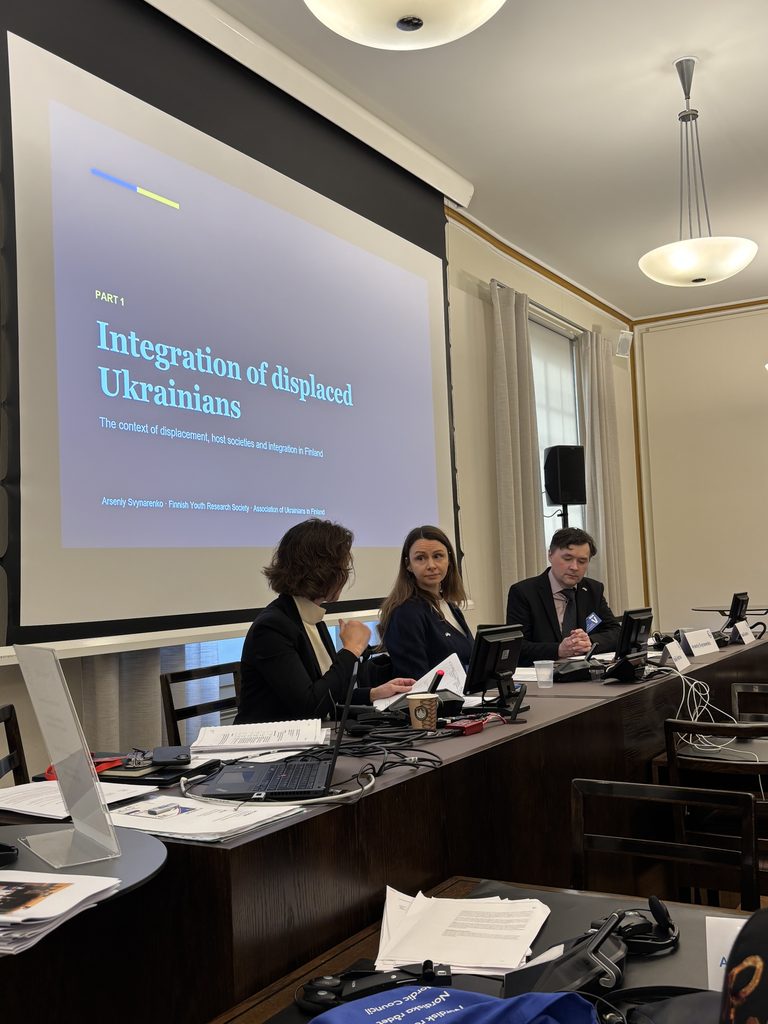
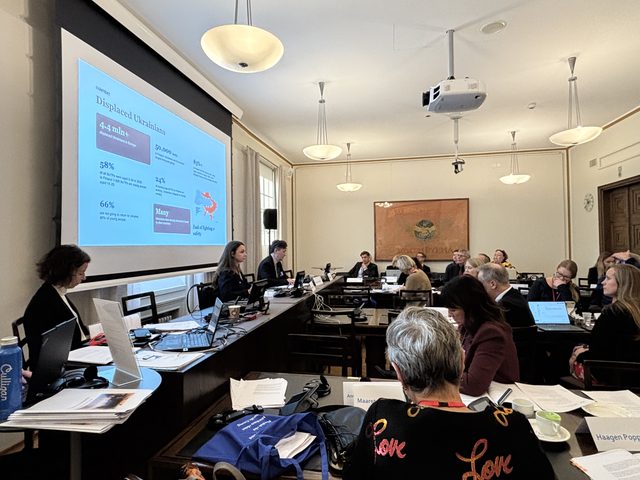
On Tuesday, 27 October, Nadiia Fedorova (Association of Ukrainians in Finland) and Arseniy Svynarenko (Finnish Youth Research Society) shared their observations regarding integration of Ukrainians in Finland at the Plenary Session of the Nordic Council and Meeting of the Welfare Committee
Arseniy Svynarenko presented the results of a recent study on Ukrainian young people in Finland conducted as part of the DECA project. As many Ukrainians under temporary protection are unlikely to return to Ukraine in the near future, maintaining young people’s connections with Ukraine has become an increasingly important issue. Integration is shaped not only by employment and language acquisition but also by social belonging, access to information, and community support. Ukrainian diaspora organizations are among the key actors in supporting both integration and the maintenance of ties with Ukraine, as well as cultural identity. Across the Nordic countries, there remains a need for services provided in Ukrainian and by Ukrainian professionals. In the host societies there are significant gaps in knowledge about Ukraine, Ukrainian society, and Ukrainian culture also need to be addressed through greater support for Ukrainian studies.
Finally, the war has fostered responsibility, resilience, and civic engagement among Ukrainians. Networks of civil society organisations, volunteers, and local communities have become an essential part of Ukraine’s social resilience and democratic life.
Nadiia Fedorova shared insights into the work carried out by Ukrainian civil society organisations in providing mental health support to displaced Ukrainians and argued that psychological well-being is a prerequisite for successful integration. Research from Norway and Denmark shows high levels of mental health challenges among Ukrainian refugees, including anxiety and symptoms of post-traumatic stress disorder, highlighting the need for accessible and culturally appropriate support. Ukrainian civil society organisations responded rapidly after the full-scale invasion by establishing Ukrainian-language support services. Examples from Finland and Denmark demonstrate how community-led initiatives have reached thousands of displaced people, often filling gaps in public services.
Nadiia Fedorova also highlighted successful Nordic cooperation through the Nordic Ukraine Advocacy Summit. Also the FRID programme, which adapted Finland’s TOIVO peer-support model for Ukrainians, demonstrates how effective practices can be transferred across countries to strengthen mental health support. At the same time, significant barriers remain, including the non-recognition of Ukrainian professional qualifications, insufficient funding, and the lack of trauma-informed approaches in mental health services. These challenges limit access to appropriate support and reduce the effectiveness of integration efforts. The Ukrainian Association in Finland is therefore calling for a human-centred, long-term approach based on stable funding for Ukrainian community organisations, the expansion of Ukrainian-language services, and the international sharing of proven support models.
We are grateful for the invitation and the opportunity to contribute to this important discussion. We strongly believe that Ukrainian organisations must have a voice in international forums, where their experiences, perspectives and expertise can help shape policies and support for displaced Ukrainians.